
Guide · Oct 26, 2026
Walnuts Nutrition Facts: Omega-3, Fiber and Serving Sizes
Walnut nutrition per ounce, 100 g and cup from USDA data: calories, protein, ALA omega-3, minerals, English vs. black walnuts, and how they compare with other nuts.
By Michael Gonzales · Last updated
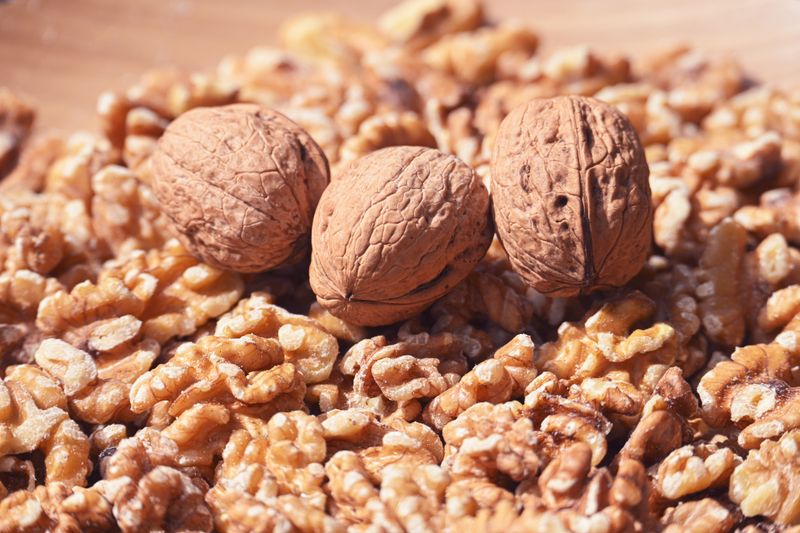
Short answer: One ounce of English walnuts (about 14 halves, 28 g) has about 185 calories, 4.3 g of protein, 18.5 g of fat, 3.9 g of carbs and 1.9 g of fiber. That ounce also carries 2.57 g of ALA, the plant omega-3. That's more than the daily Adequate Intake for adults, according to USDA FoodData Central and the NIH.
Last checked October 22, 2026 against USDA FoodData Central (SR Legacy) and the NIH Office of Dietary Supplements.
This page sticks to the numbers: what's in a serving, how walnuts compare with other nuts, and how to buy and measure them. It doesn't make health claims.
Walnut nutrition facts per serving
USDA's standard reference entry for English walnuts (the common grocery-store kind) gives these values. We've shown them for 1 ounce, for 100 grams and for 1 cup chopped, since recipes use all three. One ounce is about 14 halves (28.35 g), and a cup chopped is 117 g. "Mono" and "poly" are monounsaturated and polyunsaturated fat.
| Nutrient | 1 oz | 100 g | 1 cup chopped |
|---|---|---|---|
| Calories | 185 | 654 | 765 |
| Protein | 4.3 g | 15.2 g | 17.8 g |
| Total fat | 18.5 g | 65.2 g | 76.3 g |
| Saturated fat | 1.7 g | 6.1 g | 7.2 g |
| Mono fat | 2.5 g | 8.9 g | 10.5 g |
| Poly fat | 13.4 g | 47.2 g | 55.2 g |
| Carbohydrates | 3.9 g | 13.7 g | 16.0 g |
| Fiber | 1.9 g | 6.7 g | 7.8 g |
| Sugars | 0.7 g | 2.6 g | 3.1 g |
| Sodium | 1 mg | 2 mg | 2 mg |
Source: USDA FoodData Central, Nuts, walnuts, english (FDC 170187). Per-ounce and per-cup values are calculated from the 100 g figures and USDA's portion weights.
Most of the fat in walnuts is polyunsaturated. That's unusual among common nuts, and it's where the omega-3 comes from.
How much omega-3 is in walnuts?
An ounce of English walnuts has about 2.57 g of alpha-linolenic acid (ALA). The NIH Office of Dietary Supplements uses that same figure in its omega-3 fact sheet.
For context, the NIH sets the Adequate Intake (AI) for ALA at:
| Group | ALA Adequate Intake per day |
|---|---|
| Men 14 and older | 1.6 g |
| Women 14 and older | 1.1 g |
Source: NIH Office of Dietary Supplements, Omega-3 Fatty Acids fact sheet for health professionals.
So one ounce covers the AI for both groups on paper. Keep two things in mind:
- ALA isn't the same as fish omega-3s. EPA and DHA come mainly from seafood. The NIH says the body's conversion of ALA into EPA and DHA is very limited, with reported rates under 15%. Our omega-3 foods guide breaks down both kinds.
- Walnuts have far more omega-6 than omega-3. USDA lists about 10.8 g of linoleic acid (the main omega-6) per ounce, about four times the ALA.
What minerals and vitamins do walnuts have?
Walnuts stand out for copper and manganese. Here's one ounce against the FDA Daily Values used on nutrition labels:
| Nutrient | 1 oz walnuts | Daily Value | % DV |
|---|---|---|---|
| Copper | 0.45 mg | 0.9 mg | 50% |
| Manganese | 0.97 mg | 2.3 mg | 42% |
| Magnesium | 45 mg | 420 mg | 11% |
| Phosphorus | 98 mg | 1,250 mg | 8% |
| Zinc | 0.9 mg | 11 mg | 8% |
| Fiber | 1.9 g | 28 g | 7% |
| Iron | 0.8 mg | 18 mg | 5% |
Sources: USDA FoodData Central (FDC 170187); FDA Daily Values for nutrition labels. % DV is rounded.
Walnuts are a modest source of selenium, at about 1.4 µg per ounce. If selenium is what you're after, see our Brazil nuts guide. For magnesium, our magnesium foods list has bigger sources.
English walnuts vs. black walnuts
Black walnuts are a different species with a stronger, earthier taste. They're sold mostly as pieces for baking. Their nutrition differs more than you might expect:
| Per 1 oz (28.35 g) | English walnuts | Black walnuts |
|---|---|---|
| Calories | 185 | 175 |
| Protein | 4.3 g | 6.8 g |
| Fat | 18.5 g | 16.8 g |
| Fiber | 1.9 g | 1.9 g |
| ALA omega-3 | 2.57 g | 0.76 g |
| Magnesium | 45 mg | 57 mg |
| Selenium | 1.4 µg | 4.8 µg |
Source: USDA FoodData Central, FDC 170187 (English) and FDC 170186 (black, dried), calculated per ounce.
The short version: black walnuts have more protein, but English walnuts have about three times the ALA.
Walnuts vs. other nuts
Here's how an ounce of walnuts lines up with three other common nuts:
| 1 oz | Calories | Protein | ALA omega-3 |
|---|---|---|---|
| Walnuts | 185 | 4.3 g | 2.57 g |
| Almonds | 164 | 6.0 g | trace |
| Pecans | 196 | 2.6 g | 0.28 g |
| Macadamias | 204 | 2.2 g | 0.06 g |
Fiber per ounce is 3.5 g in almonds, 2.7 g in pecans, 2.4 g in macadamias and 1.9 g in walnuts. Fat per ounce runs from 14.2 g in almonds to 21.5 g in macadamias, with walnuts at 18.5 g and pecans at 20.4 g. For magnesium, almonds lead with 77 mg, then walnuts (45 mg), macadamias (37 mg) and pecans (34 mg).
Source: USDA FoodData Central SR Legacy (walnuts 170187, almonds 170567, pecans 170182, raw macadamias 170178), calculated per ounce.
Almonds win on protein, fiber and magnesium. Walnuts are the clear ALA leader. For seeds, our pumpkin seeds guide runs the same kind of numbers.
How many walnuts are in a serving?
There's no official "walnuts per day" number, so we won't invent one. What labels and USDA do agree on is the serving size:
- 1 ounce is about 14 halves (28.35 g), per USDA.
- About 7 in-shell walnuts give 28 g of nutmeat, per USDA's in-shell portion.
- Packaged walnut labels list 28 to 34 g per serving. That's usually written as 1 oz, 1/4 cup or 1/3 cup, depending on the brand, based on labels in USDA's branded foods database.
Cup measures vary a lot because pieces pack tighter than halves. USDA lists a cup of chopped walnuts at 117 g, a cup of pieces at 120 g and a cup of ground walnuts at 80 g. If you track calories, weigh them. Our kitchen scale guide covers how to pick one.
If you're watching fiber, an ounce of walnuts covers only a small share. Our high-fiber foods list has bigger sources.
Who should skip walnuts?
Anyone with a tree nut allergy. The FDA lists tree nuts among the nine major food allergens that must be named on U.S. food labels. Walnuts also turn up in baked goods, pesto, granola and salad toppings, so check ingredient lists.
If you've been told to limit fat or calories, the serving math above matters most. Walnuts are calorie-dense, and a handful can easily be 2 ounces or more.
How to buy walnuts
You'll usually see four forms:
| Form | What you get | Good for |
|---|---|---|
| Halves | Whole kernel halves | Snacking, toasting, salads |
| Halves and pieces | A mix, often cheaper | Everyday cooking |
| Chopped or pieces | Ready-sized bits | Baking, oatmeal |
| In-shell | Whole nuts to crack | Holidays, longer storage before opening |
A few label checks help:
- Look for "raw" vs. "roasted" and any added salt or oil. Plain raw walnuts list one ingredient: walnuts. Check sodium on roasted or seasoned packs.
- Check the best-by date and follow the storage directions on the package.
- Compare price per ounce, not per bag. Bulk bags vary a lot between halves and pieces.
You can compare raw walnut halves on Amazon. If you bake with walnuts often, a manual nut chopper saves knife work and keeps pieces even.
Sources
- U.S. Department of Agriculture, Agricultural Research Service. FoodData Central, SR Legacy: Nuts, walnuts, english (FDC ID 170187). Accessed October 22, 2026. https://fdc.nal.usda.gov/fdc-app.html#/food-details/170187/nutrients
- U.S. Department of Agriculture, Agricultural Research Service. FoodData Central, SR Legacy: Nuts, walnuts, black, dried (FDC ID 170186). Accessed October 22, 2026. https://fdc.nal.usda.gov/fdc-app.html#/food-details/170186/nutrients
- U.S. Department of Agriculture, Agricultural Research Service. FoodData Central, SR Legacy: almonds (170567), pecans (170182), macadamia nuts, raw (170178). Accessed October 22, 2026. https://fdc.nal.usda.gov/
- National Institutes of Health, Office of Dietary Supplements. Omega-3 Fatty Acids: Fact Sheet for Health Professionals. https://ods.od.nih.gov/factsheets/Omega3FattyAcids-HealthProfessional/
- U.S. Food and Drug Administration. Daily Value on the Nutrition and Supplement Facts Labels. https://www.fda.gov/food/nutrition-facts-label/daily-value-nutrition-and-supplement-facts-labels
- U.S. Food and Drug Administration. Food Allergies. https://www.fda.gov/food/nutrition-food-labeling-and-critical-foods/food-allergies
- U.S. Department of Agriculture. FoodData Central, Branded Foods: walnut product labels (serving sizes). Accessed October 22, 2026. https://fdc.nal.usda.gov/
Photo: Alexas Fotos via Pexels (Pexels license).
ProstateFoods writes about food, not treatment. Nothing here is medical advice or a claim that any food treats, cures or prevents a disease. Talk to your doctor before changing how you eat, especially if you take medication or have a health condition. See our medical disclaimer.
Frequently asked questions
How many calories are in 1 cup of walnuts?
About 765 calories in a cup of chopped English walnuts (117 g), per USDA. A cup of halves (about 50 halves, 100 g) is about 654 calories.
How much protein is in walnuts?
About 4.3 g per ounce of English walnuts, and about 6.8 g per ounce of black walnuts, per USDA FoodData Central.
Are walnuts high in omega-3?
Yes, for ALA. An ounce of English walnuts has about 2.57 g, far more than almonds, pecans or macadamias in USDA's data. That's ALA, the plant form, not the EPA and DHA found in fish.
How many walnuts are in an ounce?
About 14 halves, per USDA. Most packaged walnuts list a serving of 28 to 34 g, often written as 1/4 cup.
Do walnuts have carbs?
A little. One ounce has about 3.9 g of carbohydrates, including 1.9 g of fiber and 0.7 g of sugars, per USDA.

Written by
Michael Gonzales
Health & fitness consultant
Michael has a diverse set of skills and passions, with a full-time career as an airline pilot and a dedicated focus on health and fitness consulting. He understands the importance of balancing a busy lifestyle with maintaining a healthy mind and body, and is committed to helping others achieve the same success. Michael's expertise in health and fitness is not just limited to physical training, but also extends to nutrition, stress management, and overall wellbeing. He takes a holistic approach to health and fitness, helping clients to achieve their goals in a sustainable and fulfilling way. With a strong desire to inspire and motivate others, Michael is always ready to share his time and knowledge with those who seek his guidance. Whether in the air or on the ground, Michael is dedicated to helping others live their best lives.