
Guide · Oct 29, 2026
Pumpkin Seed Pesto: A Simple Basil Sauce
Toasted pumpkin seeds stand in for pine nuts in this quick basil pesto. Makes about 1 cup in 15 minutes, with dairy-free and no-basil swaps, a USDA nutrition estimate and safe storage tips.
By Michael Gonzales · Last updated
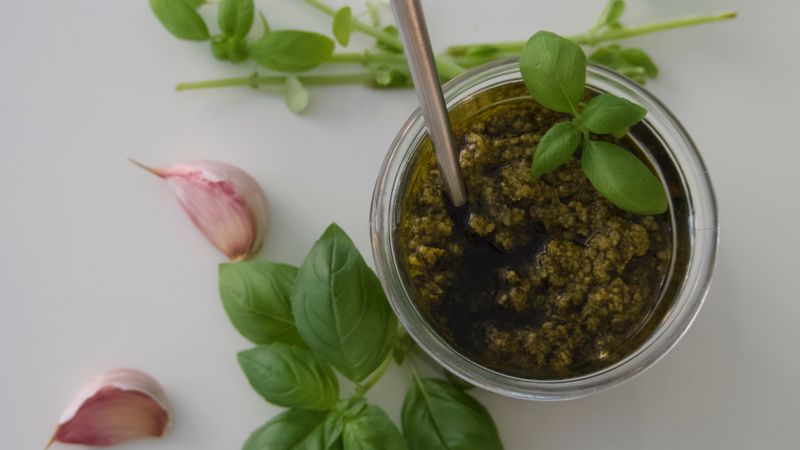
Short answer: Toast 1/2 cup of raw pumpkin seeds in a dry skillet until they start to pop, then let them cool. Blend them with 2 packed cups of basil, 1/3 cup of grated Parmesan, 2 garlic cloves, 2 tablespoons of lemon juice and a pinch of salt, then stream in 1/3 cup of olive oil. It makes about 1 cup in 15 minutes.
This recipe was developed by Michael Gonzales from standard techniques and measurements.
Prep time: 10 min Cook time: 5 min Total time: 15 min
What do you need for pumpkin seed pesto?
Makes about 1 cup (8 servings of 2 tablespoons).
- 1/2 cup (about 70 g) raw, unsalted shelled pumpkin seeds (pepitas)
- 2 cups packed fresh basil leaves (about 50 g)
- 1/3 cup (about 30 g) finely grated Parmesan cheese
- 2 garlic cloves, peeled
- 2 tablespoons fresh lemon juice (about 1 lemon)
- 1/4 teaspoon salt, plus more to taste
- 1/3 cup extra virgin olive oil
- 2 to 4 tablespoons cold water, as needed
Shelled pumpkin seeds are the flat green kernels, often sold as pepitas. If you buy them in bulk, a bag of Terrasoul raw unsalted pumpkin seeds keeps in a cool, dark cupboard, and unsalted seeds let you control the salt in the sauce.
How do you make pumpkin seed pesto?
- Rinse the basil and lemon under running water, as FDA advises for fresh produce, then dry the basil well in a salad spinner or between clean towels [2].
- Put the pumpkin seeds in a dry skillet over medium heat. Stir often for 3 to 5 minutes, until they puff up, smell nutty and some start to pop. Tip them onto a plate and let them cool for 5 minutes.
- Pulse the cooled seeds and garlic in a food processor until they're finely chopped.
- Add the basil, Parmesan, lemon juice and salt. Pulse until the basil is finely chopped, scraping down the sides once or twice.
- With the motor running, pour in the olive oil in a slow, steady stream until the pesto comes together.
- Add cold water a tablespoon at a time until it's as loose as you like. Taste and add more salt or lemon juice if it needs it.
No food processor? Chop the toasted seeds and garlic very finely on a board, then the basil, and stir everything together in a bowl with the oil. It will be chunkier, which is good on vegetables and toast.
Can you use pumpkin seeds instead of pine nuts in pesto?
Yes. Pumpkin seeds swap in one for one. Classic Genovese pesto is made with pine nuts, and pumpkin seeds give a sauce that's a little earthier, and a little greener. Sunflower seeds and walnuts work the same way if that's what you have.
Do you need to soak pumpkin seeds for pesto?
No. This recipe doesn't call for soaking. A few minutes of dry toasting gives the seeds a deeper, nuttier flavor and makes them easier to blend. Watch them closely, though, because they go from golden to burnt quickly once they start popping.
What are common pesto mistakes to avoid?
- Wet basil. Water on the leaves dilutes the sauce and can make it separate. Dry them well.
- Over-blending. Running the processor for a long time can warm the basil and turn it dull and bitter. Pulse, and stop when it's still a little textured.
- Hot seeds. Let toasted seeds cool before blending, or they'll start to wilt the basil.
- Too much garlic. Raw garlic gets stronger as pesto sits. Start with two cloves and add more next time if you like it sharper.
- Salting before the cheese. Parmesan is salty, so taste after it's in.
How do you use pumpkin seed pesto?
With pasta. Cook about 8 ounces of pasta. Save 1/2 cup of the cooking water, drain, and toss the hot pasta with 1/2 cup of pesto and a splash of the water until glossy. Serves 2 to 3.
Other ideas. Spoon it over roasted vegetables, like our roasted broccoli with garlic and lemon. Stir a spoonful into tomato soup, spread it on toast with sliced tomato, or thin it with extra lemon juice and oil for a salad dressing. It's also good next to baked salmon with lemon and dill.
Do pumpkin and pesto go together? They do. Drizzle it over roasted pumpkin or butternut squash cubes, or stir it into a squash soup just before serving.
Pumpkin seed pesto without basil or cheese
- No basil: Use parsley, baby spinach or kale, or a mix. Cilantro works too, with lime juice in place of lemon.
- Dairy-free: Leave out the Parmesan and add 1 to 2 tablespoons of nutritional yeast and a little extra salt.
- Lower sodium: Use half the Parmesan and skip the added salt; finish with extra lemon.
How much nutrition is in pumpkin seed pesto?
Our estimate for one serving (2 tablespoons) is about 145 calories, 4 g protein, 14 g fat, 2 g carbohydrate, less than 1 g fiber and about 120 mg of sodium. We worked this out from USDA FoodData Central values for each ingredient [1]. Most of the calories come from the olive oil and pumpkin seeds. For more on the seeds themselves, see our pumpkin seeds nutrition guide, and our olive oil buying guide can help you pick a bottle.
This pesto contains milk (from the Parmesan), which is one of the major food allergens in the U.S. [4]. Use the dairy-free swap above if you avoid it.
How long does homemade pesto last?
Pesto is an uncooked mix of herbs, garlic and oil, so store it carefully. The National Center for Home Food Preservation says homemade pesto should be made fresh and kept in the refrigerator for no more than 3 days, and that it can be frozen for longer storage [3].
To freeze it, pack the pesto into glass freezer jars or plastic freezer boxes, leaving 1/2 inch of headspace, then label and freeze [3]. For small portions, you can also freeze it in an ice cube tray and move the cubes to a freezer container.
Find more sauces and meals on our recipes page, including our simple tomato sauce with olive oil.
Sources
- U.S. Department of Agriculture, Agricultural Research Service. FoodData Central, SR Legacy: Seeds, pumpkin and squash seed kernels, dried (FDC ID 170556); Basil, fresh (172232); Cheese, parmesan, hard (170848); Garlic, raw (169230); Lemon juice, raw (167747); Oil, olive, salad or cooking (171413); Salt, table (173468). Accessed October 27, 2026. https://fdc.nal.usda.gov/
- U.S. Food and Drug Administration. Selecting and Serving Produce Safely. https://www.fda.gov/food/buy-store-serve-safe-food/selecting-and-serving-produce-safely
- National Center for Home Food Preservation, University of Georgia. Freezing Pesto. https://nchfp.uga.edu/how/freeze/vegetable/freezing-pesto/
- U.S. Food and Drug Administration. Food Allergies. https://www.fda.gov/food/nutrition-food-labeling-and-critical-foods/food-allergies
ProstateFoods writes about food, not treatment. Nothing here is medical advice or a claim that any food treats, cures or prevents a disease. Talk to your doctor before changing how you eat, especially if you take medication or have a health condition. See our medical disclaimer. Photo: Pesto sauce in glass jar with basil leaves by thea a., via Pexels (Pexels license).
Frequently asked questions
Can you use pumpkin seeds instead of pine nuts in pesto?
Yes. Shelled pumpkin seeds (pepitas) swap in one for one. They make a pesto that's a little earthier and greener than the classic pine nut version. Toast them first for the best flavor.
How long do you have to soak pumpkin seeds for pesto?
You don't need to soak them for this recipe. Toast raw shelled pumpkin seeds in a dry skillet over medium heat for 3 to 5 minutes, until they puff and start to pop, then let them cool before blending.
Do pumpkin and pesto go together?
Yes. Pumpkin seed pesto is good drizzled over roasted pumpkin or butternut squash, or stirred into squash soup just before serving.
What are some common pesto mistakes to avoid?
Using wet basil, over-blending until the basil turns dull, blending seeds while they're still hot, adding too much raw garlic, and salting before you've added the Parmesan. Pulse instead of running the processor nonstop, and taste at the end.
How long does homemade pesto last in the fridge?
The National Center for Home Food Preservation says homemade pesto should be kept in the refrigerator for no more than 3 days. It can be frozen for longer storage in freezer jars or boxes with 1/2 inch of headspace.

Written by
Michael Gonzales
Founder & Editor
Michael Gonzales is the founder of Cloudalien Technologies LLC, the company that owns ProstateFoods, and he edits every page on the site. ProstateFoods publishes everyday recipes, food lists and grocery guides for men who want to eat well. Michael is not a doctor or registered dietitian, so nothing on ProstateFoods is medical advice.