
Guide · Oct 28, 2026
Best Canned Tomatoes: Whole, Crushed, Paste and What the Labels Mean
Best canned tomatoes as of October 2026: whole, crushed, paste and passata compared, with San Marzano and DOP label terms explained for buyers and cooks.
By Michael Gonzales · Last updated
Short answer: The best canned tomatoes for most home cooks are certified San Marzano style whole peeled tomatoes for sauces, crushed tomatoes for weeknight cooking, and double concentrated paste in a tube for small additions, as of October 2026. The format matters more than the brand: whole peeled tomatoes give you the most control, crushed saves time, diced hold their shape in soups and chilis, and paste adds depth by the spoonful. What the label terms mean, and which products match each job, is the whole of this guide.
This is a buying guide, in the same spirit as our olive oil buying guide. For nutrient amounts in tomato products, see our foods high in lycopene table, and for cooking, our simple tomato sauce with olive oil recipe. This page covers the purchase decision: formats, label terms, brands and prices of entry.
Which canned tomato format should you buy?
| Format | Typical can size | Best use | Texture after cooking |
|---|---|---|---|
| Whole peeled | 28 oz | Sauces you crush or blend yourself | You control it, chunky or smooth |
| Crushed | 28 oz | Weeknight pasta sauce, pizza sauce base | Even, lightly textured puree |
| Diced | 14.5 to 28 oz | Soups, stews, chili, braises | Distinct pieces that hold shape |
| Tomato paste | 6 oz can or 4.5 oz tube | Depth in soups, stews and sauces | Thick concentrate, used by the spoonful |
| Passata | 24.5 oz bottle or carton | Smooth sauces, no blending step | Fully smooth, pourable puree |
| Fire roasted | 14.5 oz | Chili, salsa style sauces | Diced with charred edges and smoky notes |
Two label details explain most of the differences shoppers taste. Diced tomatoes are usually packed with calcium chloride to keep the cubes firm, which is why they never fully soften into a sauce. Whole and crushed tomatoes generally skip that firming agent, which is why sauce recipes prefer them. The packing liquid matters too: tomatoes packed in thick puree add body, while those packed in juice give a thinner, fresher result you may need to reduce longer.
What do San Marzano and DOP mean on a label?
San Marzano is a variety of plum tomato, long and thin with dense flesh and few seeds, grown originally in the Sarno valley near Naples. DOP, short for Denominazione di Origine Protetta, is the European Union protected designation that certifies genuine San Marzano dell'Agro Sarnese-Nocerino tomatoes grown in that defined area and processed to a standard. A can marked DOP San Marzano is the certified Italian original. A can marked "San Marzano style" or "San Marzano type" is a different thing: tomatoes of that variety or style grown elsewhere, including California, sold without the DOP certification.
Neither is automatically the wrong buy. DOP cans cost more and are the traditional choice for Neapolitan style sauces. Good California grown San Marzano style tomatoes are often fresher tasting than a poorly handled import and cost less. The label term to be wary of is a bare "San Marzano" claim with tomatoes listed from a non-Italian origin and no DOP seal; that is marketing leaning on the name. Check the origin line on the back of the can, which must state where the tomatoes were grown and packed.
For a certified starting point, Cento Certified San Marzano whole peeled tomatoes in the 28 ounce can are the widely distributed DOP certified option in U.S. supermarkets, packed in thick puree with a basil leaf. Cento publishes its certification and lot traceability, which is more documentation than most brands offer, and the whole peeled format is the one our sauce recipe is built around.
Which paste, crushed and passata options are worth stocking?
Paste is where format changes the experience most. Open cans of paste waste the remainder unless you freeze spoonfuls, so tubes have become the practical standard for home kitchens. Cento double concentrated tomato paste in tubes comes as two 4.56 ounce tubes that reseal and keep in the fridge door, and double concentrated means a spoonful does the work of about two spoonfuls of regular paste. Mutti, the Parma brand that is Italy's largest tomato seller, makes the competing tube and describes the same 2-to-1 concentration logic on its own product page.
For smooth sauces without a blending step, passata is the Italian pantry answer: tomatoes passed through a sieve, sold uncooked and pourable. Mutti tomato puree, sold as passata in the 24.5 ounce bottle contains tomatoes and Mediterranean sea salt and nothing else on the ingredient list, which is the standard you want for this format. Crushed tomatoes sit between the two: brands such as Muir Glen and Tuttorosso sell organic and conventional crushed lines in 28 ounce cans, and the choice between them is mostly about whether organic certification matters to you, since the format does the same job.
A sensible pantry, and the one this site's recipes assume, is three products deep: one 28 ounce can of whole peeled for sauces, one tube of double concentrated paste for depth, and one bottle of passata or can of crushed for nights when nobody wants to blend anything.
What else should the label tell you?
Check four lines before the brand name persuades you. The ingredient list should be short: tomatoes, possibly tomato juice or puree, salt, citric acid and a basil leaf cover almost every quality can. Calcium chloride flags a diced product or a firming agent you may not want in a sauce can. Added sugar appears in some seasoned and fire roasted lines; plain cans should have none. Sodium varies widely between regular and no-salt-added versions of the same product, and because the lycopene table on this site tracks the nutrient side, the buying point here is simple: if you cook with canned tomatoes several times a week, the no-salt-added version of any format above gives you control of seasoning without changing brands.
Can lining is the last consideration. Many major brands now sell cans labelled BPA-free or non-BPA lining, and several state it on the product page rather than the can itself. If it matters to you, it is a product-page check, not something the front label reliably tells you.
Sources
- eCFR. 21 CFR 155.190, Canned tomatoes. https://www.ecfr.gov/current/title-21/chapter-I/subchapter-B/part-155/subpart-B/section-155.190
- USDA Agricultural Marketing Service. Canned Tomatoes Grades and Standards. https://www.ams.usda.gov/grades-standards/canned-tomatoes-grades-and-standards
- USDA Agricultural Research Service. FoodData Central. https://fdc.nal.usda.gov/
ProstateFoods writes about food, not treatment. Nothing here is medical advice or a claim that any food treats, cures or prevents a disease. Talk to your doctor before changing how you eat, especially if you take medication or have a health condition. See our medical disclaimer.
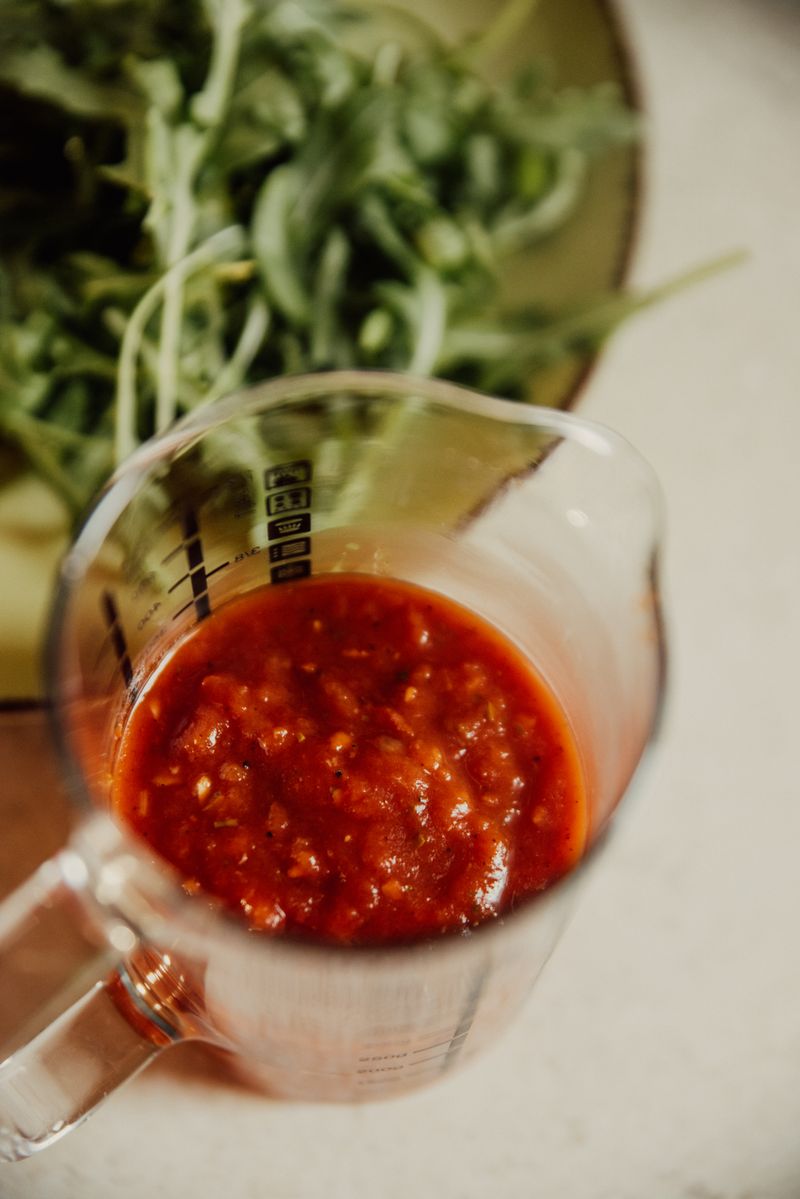
Photo: Close up shot of a pizza sauce in a glass pitcher by Alesia Kozik, via Pexels (Pexels license).
Frequently asked questions
What is the difference between San Marzano and regular canned tomatoes?
San Marzano is a plum tomato variety with dense flesh and few seeds. DOP certified cans contain the protected Italian original from the Agro Sarnese-Nocerino area. Regular canned plum or Roma style tomatoes are the same general shape without the variety certification, and good ones make fine sauce at a lower price.
Are canned tomatoes as good as fresh for sauce?
For cooked sauce, canned are usually better outside of peak tomato season, because canning tomatoes are picked ripe and processed within hours. Fresh market tomatoes sold out of season are often picked underripe. Our simple tomato sauce recipe is written for canned whole peeled tomatoes for that reason.
Why do diced tomatoes stay firm in sauce?
Most diced tomatoes are packed with calcium chloride, a firming agent that helps the cubes hold their shape. That is desirable in chili and soup and undesirable in a smooth sauce, which is why sauce recipes specify whole peeled or crushed.
Tube paste or canned paste, which should you buy?
Tube, for most home cooks. It reseals, keeps in the fridge for weeks, and is usually double concentrated, so you use less. Canned paste costs less per ounce and suits cooking in bulk, if you freeze the remainder in spoonful portions.
Do canned tomatoes need to be organic?
That is a preference, not a quality guarantee. Certified San Marzano status, a short ingredient list and the right format affect the result more than organic certification does. Several brands in this guide sell both conventional and organic lines of the same formats.

Written by
Michael Gonzales
Founder & Editor
Michael Gonzales is the founder of Cloudalien Technologies LLC, the company that owns ProstateFoods, and he edits every page on the site. ProstateFoods publishes everyday recipes, food lists and grocery guides for men who want to eat well. Michael is not a doctor or registered dietitian, so nothing on ProstateFoods is medical advice.